
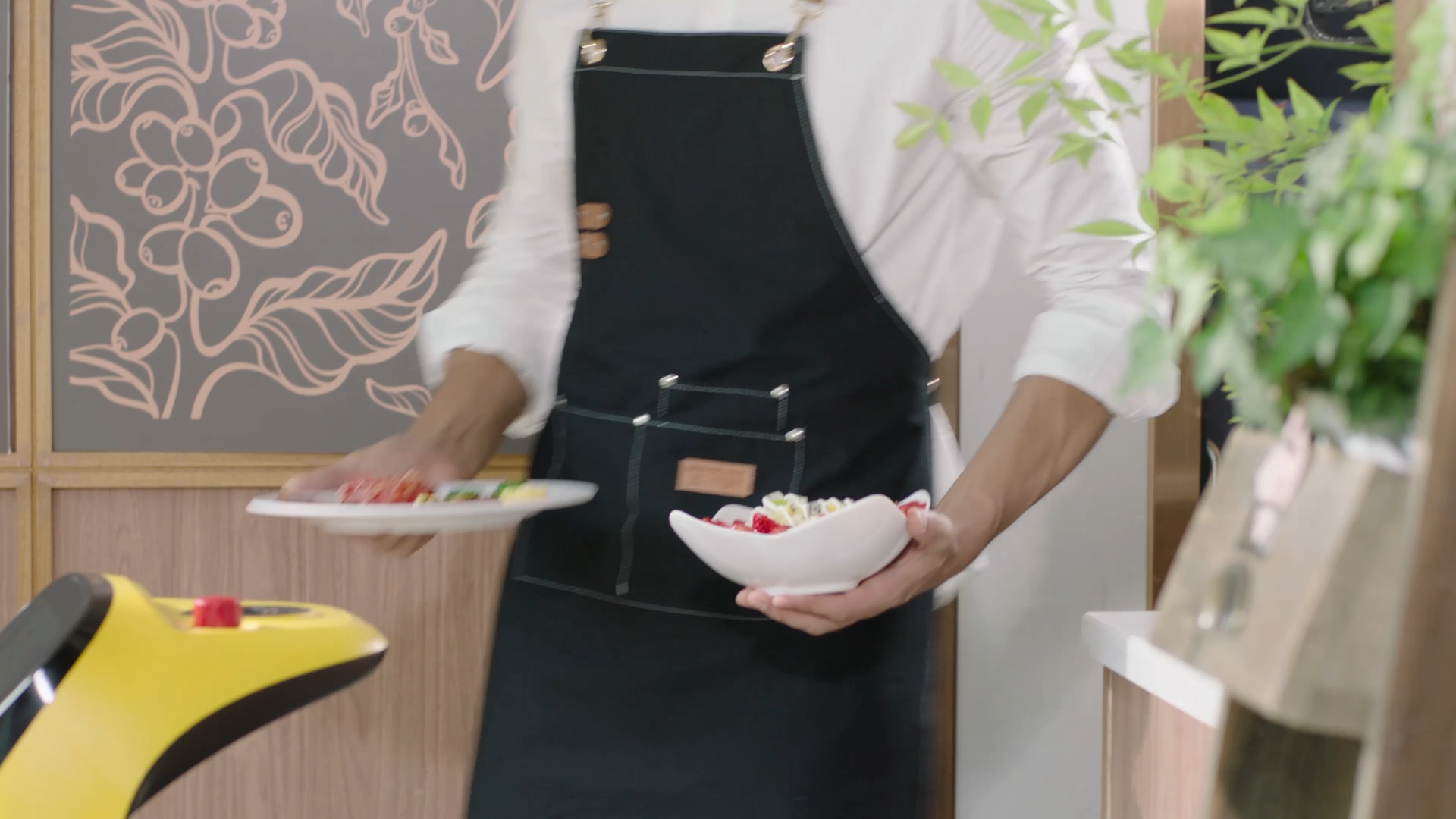
Walk into a restaurant, fast food joint, or café today, and you might see a robot with digitized anime eyes rolling out trays of food, a digital assistant taking orders, or even an automated drink dispenser mixing beverages with flawless precision (and a bit of flair thrown in).
For some, these innovations inspire awe; for others, they raise eyebrows. The most common question? “Are robots replacing us?”
It's an understandable, some would say inevitable, concern that thousands of online articles, YouTube shorts, and TikTok reels have already addressed. After all,
history has shown us time and again that every industrial revolution has stirred similar fears: when looms replaced hand-weavers, when assembly lines replaced artisans,
when ATMs arrived in banks.
Yet, history has also shown a repeating pattern: automation reshapes work, but it doesn't erase the human role. Instead, it often creates new opportunities
and allows people to focus on what they do best, especially when it comes to day-to-day human interaction.
Today's service robots are no different. Far from eliminating human workers, they are designed to empower them — making jobs less exhausting, more sustainable,
and more meaningful. In industries like restaurants, senior living, logistics, and hospitality, the robots handle repetitive, time-consuming, and physically
demanding tasks so people can focus on creativity, empathy, and connection.
The Fear vs. The Reality
According to a 2023 Pew Research Center survey, nearly 48% of Americans believe robots and computers will “probably” or “definitely” take over most
human jobs in the next 50 years. However, real-world evidence tells a different story: while robots are growing in presence, the jobs most at risk
are not the ones requiring human interaction but those built around routine, repetitive functions.
Within and beyond the bounds of food service, robots are being used to:
- Deliver plates from the kitchen to the dining floor.
- Bus dirty dishes back for cleaning.
- Mix standardized drinks or coffee orders.
- Handle inventory runs in the backroom.
Notice what's missing? Greeting walk-in customers, handling table-side complaints, reading a guest's mood, upselling with warmth, or creating a sense of belonging. Those human touches remain irreplaceable.
Reducing Burnout in High-Stress Industries
Few sectors face burnout quite like hospitality and food service. The turnover rate for restaurant employees in the U.S. reached 79% in 2021,
one of the highest of any industry, as reported by U.S. Bureau of Labor Statistics. Long hours, low margins, and heavy physical labor take an often understated yet heavy toll.
Robots can directly reduce this pressure by handling tasks that are physically draining but add little personal satisfaction for staff. For example:
- Repetitive walking: Restaurant Technology News in 2022 reported that a server walks an average of five miles per shift in a busy restaurant. Robots that ferry food and drinks slash that mileage, reducing fatigue.
- Heavy lifting: In senior living or hospitals, robots can carry bulky trays or supplies, preventing back injuries and strain.
- Repetitive cleaning: Automated dish return robots reduce the strain of hauling racks of plates.
Instead of trudging back and forth to the kitchen, staff conserve their energy for the most rewarding part of the job: engaging with customers, ensuring quality service, and creating memorable experiences.
Freeing Staff for Higher-Value Work
Automation doesn't just take tasks off the table (which it does extremely well); it reshapes how people work. When staff aren't bogged down by endless plate runs during the Saturday dinner rush or heavy lifting at the BOH, they can:
- Focus on hospitality: Customers crave connection, often in the form of a server who remembers their name, makes a welcome recommendation, or offers a genuine smile. Robots can't replicate this authenticity, no matter how hard they try.
- Upsell naturally: A server who isn't exhausted and stressed out is far more likely to offer matching dessert suggestions or explain a new menu item or promo. That translates directly to higher check averages.
- Handle complex situations. A frustrated guest, a dietary concern, a large party with unique needs — these moments necessitate and demand human judgment, empathy, and adaptability. Period
In this way, robots amplify human workers rather than diminish them. They essentially multiply staff capacity without burning people out.
A Case Study: Restaurants That Blend Robots + Humans
Take the example of Miso Robotics' “Flippy”, an AI-powered robot arm designed for fry stations. White Castle, one of the early adopters, reported
in 2021 through Restaurant Business Online that integrating Flippy into operations didn't cut jobs, but reallocated them. Workers were freed from
one of the most dangerous, repetitive tasks (standing over a fryer or griller for hours) and redirected toward guest service and speed of order delivery.
Similarly, Kura Sushi, a Japanese chain operating in the U.S., uses robots to deliver dishes along conveyor belts. Far from reducing staff, they report
improved service ratings as workers have more time to interact with guests.
Robots as Partners in Care
The service industry is broader than restaurants. It also includes elder care, hospitals, and logistics. In these environments, robots are not replacing human caregivers or nurses. Instead, they:
- Deliver medications or supplies across large facilities, saving nurses precious time.
- Carry trays of meals so caregivers can sit and engage with residents instead of rushing back and forth.
- Provide reminders (through voice interfaces) that supplement, not replace, human care.
In fact, studies suggest that human-robot collaboration in care settings improves patient satisfaction, because patients get more direct interaction with staff, according to Frontiers in Robotics and AI in 2020. Robots can't replace the warmth of human presence, but they can make sure caregivers have more bandwidth to provide it.
Addressing the Job Displacement Myth
The World Economic Forum's Future of Jobs Report 2023 predicts that while automation may displace 85 million jobs globally by 2026, it will
simultaneously create 97 million new roles, particularly in “areas like technology oversight, data analysis, and customer experience management (WEF, 2023).”
In restaurants and hospitality, this doesn't mean servers will become programmers. It means staff will increasingly work alongside technology,
developing hybrid skills: managing robot fleets, troubleshooting devices, and integrating automation into daily service. Already, some chains
are creating roles like Robot Support Specialist: a job that didn't exist five years ago.
No matter how advanced AI becomes, there are elements of human service that remain irreplaceable:
- A genuine, warm smile.
- Reading the room when a guest is upset (or downright pissed off).
- Making small talk that brightens a day.
- Anticipating wants, needs, and preferences without being asked.
These emotional connections are what make customers loyal. In fact, PwC published an article in 2018 stating that 73% of consumers say friendly human employees, customer service representatives, or frontline staff make them fall in love with a brand.
Empowerment, Not Replacement
Robots in restaurants, senior care, logistics, and beyond aren't competitors to human workers. They're allies.
They lift burdens, reduce burnout, and multiply the impact of every staff member. When humans are freed from monotonous labor, they can focus on creativity,
connection, and care, all the things that truly set businesses apart.
The future isn't “robot vs. human.” It's robot + human, together creating a service that's more efficient, more human, and more soulful.
The conversation about automation often gets stuck in fear, but the reality is far more hopeful. Just like the introduction of ATMs didn't
eliminate bank tellers but reshaped their roles, today's service robots aren't here to erase jobs. They're here to make work better, safer, and more sustainable.
If you're curious about how robots can empower your team rather than replace them, visit USABots.com to learn more and book a consultation to see how automation
can bring both service and soul to your business.